
Why is Regular Boiler Service Crucial Before Winter Hits?
It is the first truly cold night of the season. You nudge the thermostat up, wait for that familiar rumble from the basement, and the house stays quiet. The radiators are cold, the floors are colder, and now you are standing over a unit you have not thought about since spring. If that sounds familiar, you are far from alone. The most common reason a boiler dies on the first cold night is simple. It ran hard all of last winter, sat untouched through the warm months, and was asked to fire up again without anyone checking what changed inside it.
Boilers are patient machines. They hide small problems for months, then reveal all of them at once on the coldest night, usually when you least want to deal with it. A worn seal, a sluggish circulator, a thin crust of sediment, or a partly blocked flue rarely shows itself in July. It waits. After enough winters spent in basements across this region, the pattern barely changes. The homes that lose heat in the first hard freeze are almost always the ones that skipped a simple seasonal check. Nearly every one of those failures is predictable, and almost all of them are preventable.
Why a Boiler Needs Attention Before the First Freeze
The danger window is the gap between the last warm day and the first hard freeze, which in this part of the state usually lands in late October or November. During the idle summer months, water inside the system goes still, minerals settle, seals dry out, and small amounts of air work their way into the loop. None of that matters while the boiler is off. The moment you call for heat, every one of those quiet changes gets stress tested at once.
A boiler that fired perfectly in March is not the same boiler in November. Rubber gaskets shrink as they cool and dry. Circulator bearings stiffen. Pilot assemblies collect dust. On the first fire of the season, these worn parts either hold or fail, and you find out which the hard way. A pre-season check finds the weak link while you still have time and a warm house to deal with it.
What Usually Goes Wrong When a Boiler Sits Idle
Sediment buildup is the single most common issue we find. Over time, minerals and rust settle to the bottom of the boiler and inside the heat exchanger. That layer acts like an insulating blanket, so the burner has to run longer to push the same heat into your water. You feel it as a unit that runs constantly but never quite keeps up, and you hear it as kettling, that rumbling, percolating sound from a boiler fighting against scale.
The next usual suspect is the circulator pump. These move heated water through your loop, and most last 10 to 15 years. A pump that limped through last season often will not restart after a summer at rest. The radiators upstairs stay cold while the boiler itself feels warm, a classic sign the heat is being made but not moved.
Air in the system is third. Trapped air collects at the high points of your loop and blocks flow, leaving some rooms cold while others bake. Low water pressure, a waterlogged expansion tank, and a tired pilot or ignition assembly round out the short list. Each is minor on its own and easy to correct early, but ignored, any of them can leave a whole floor without heat.
The Quiet Danger Most People Miss
The risk that matters most is the one you cannot see. A cracked heat exchanger or a blocked flue can allow carbon monoxide to spill back into your home instead of venting outside. This is the reason a seasonal check is about safety, not just comfort. Idle months let nests, debris, and corrosion build in the flue, and the first thing a real inspection confirms is that exhaust is leaving the building cleanly.
WARNING: If you ever smell something sharp near the boiler, see soot around the unit, or your carbon monoxide alarm sounds, do not troubleshoot it yourself. Get everyone out, open a door on the way, and call for a professional inspection. Combustion and venting problems are not DIY territory.
How We Inspect a Boiler Before Winter
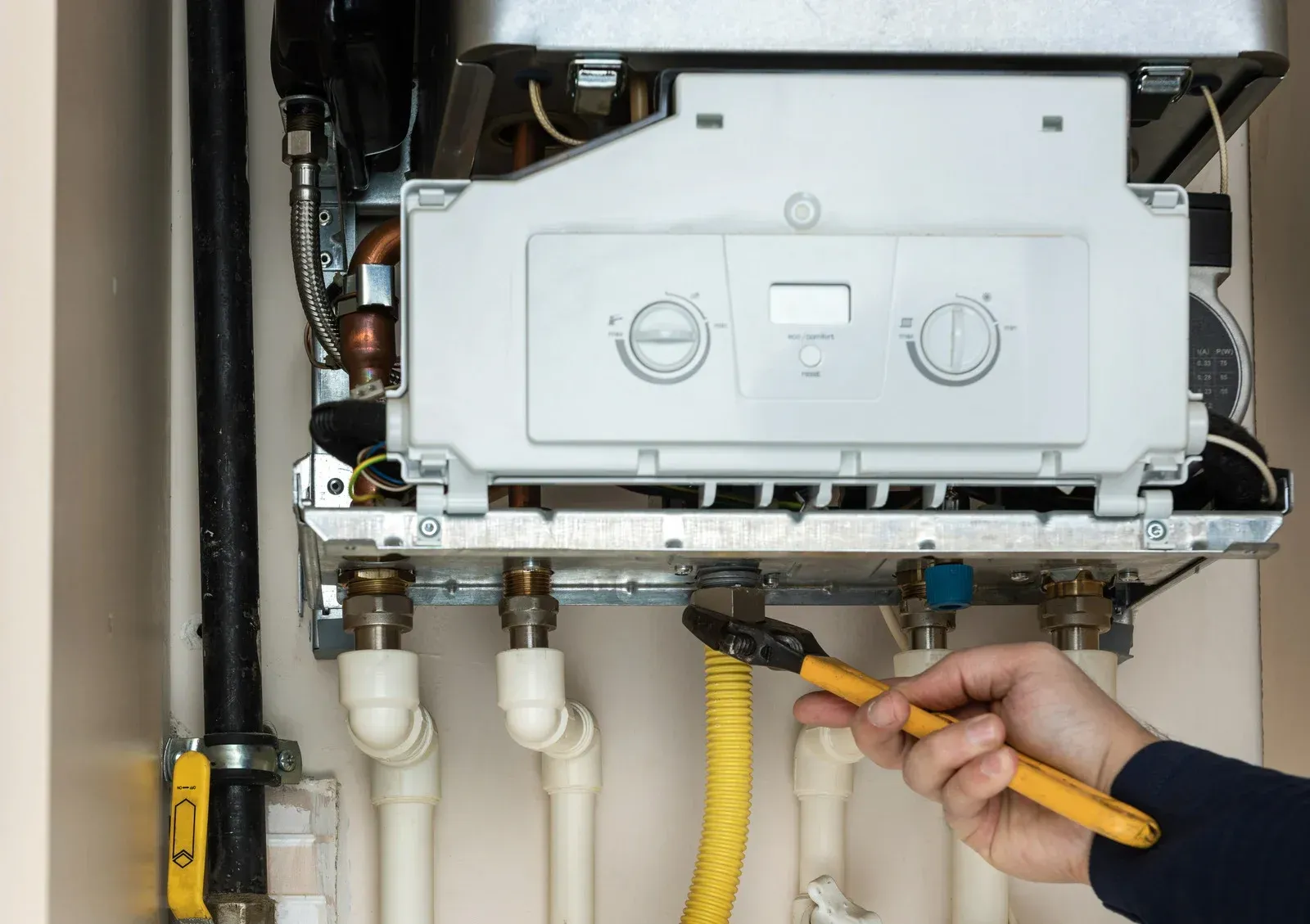
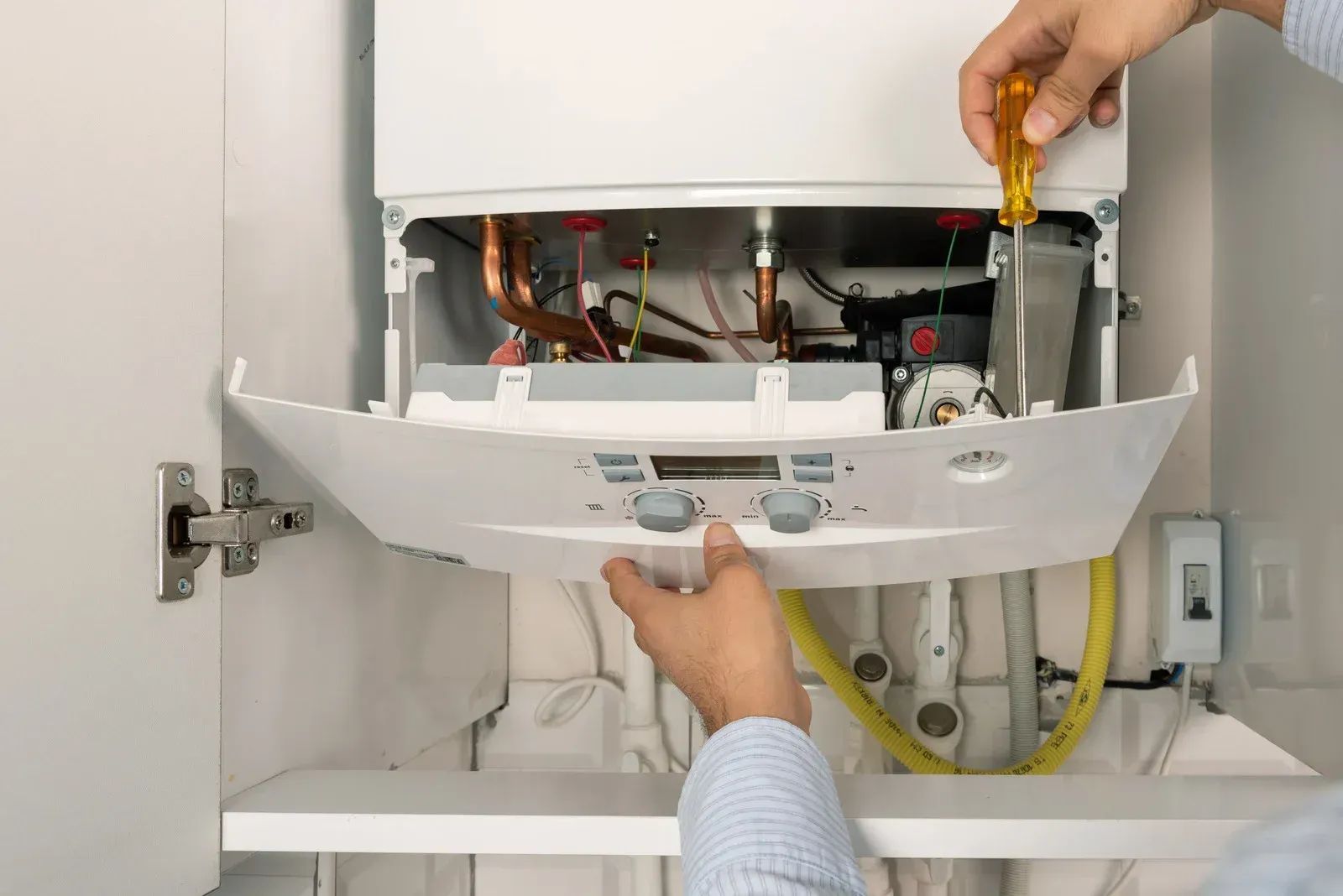
A proper inspection follows the same order every time. We check water pressure and the expansion tank first, since most pressure faults trace back there. Then we test the circulator, bleed trapped air from the high points, and confirm the low water cutoff is working on steam units. From there we open the unit to check the heat exchanger for cracking, clean the burner and pilot assembly, and verify the flue is clear and drafting correctly.
On service calls, we frequently find that a boiler labeled broken is really just air-bound or running on a failed expansion tank, both quick corrections once you know where to look. The combustion check at the end is what separates a real service from a quick glance. A boiler that lights is not the same as a boiler that is burning clean and venting safely.
A Few Things You Can Do Right Now
You can do some useful checks yourself before the season starts. Look at the pressure gauge. A cold system should typically read around 12 to 15 psi. Walk your radiators and feel for ones that stay cold at the top, which points to trapped air you can often bleed with a radiator key. Make sure nothing is stacked against the boiler or blocking its air supply.
TIP: Turn your heat on for ten minutes on a cool day in early fall rather than waiting for the first freeze. If a room stays cold, the boiler short cycles, or you hear rumbling, you have found a problem while it is still small and the weather is still on your side.
Why Winters in This Region Are Harder on Boilers
Older housing stock changes the math here. Many homes in this area still run original cast iron and steam systems that have been working for decades, and these units are more sensitive to sediment and neglect than newer models. Damp, cold basements add corrosion that a drier climate would never produce. Hard water in parts of the region speeds up scale inside the heat exchanger, so the buildup that takes years elsewhere can appear faster locally.
The freeze risk is also real. Boilers and pipes sitting in unheated basements and crawlspaces are exposed once temperatures drop, and a single hard overnight freeze can crack a line. These local pressures are exactly why a boiler here benefits from a check each fall rather than every other year.
Keeping Your Boiler Reliable All Season
A yearly fall service is the backbone of a reliable system. Between visits, glance at the pressure gauge monthly, listen for new sounds, and keep the area around the unit clear. Bleed your radiators at the start of the season and again if rooms turn cold. On steam systems, flushing sediment each fall makes a real difference in older equipment.
If your boiler is past 15 to 20 years, struggling every winter, and showing rust or repeated faults, it may be reaching the point where steady upkeep matters more than ever, or where replacement starts to make sense. Honest answer: sometimes a tune up carries an old unit for years, and sometimes it only masks a failing heat exchanger. A proper inspection is how you tell the difference before winter forces the decision for you.
Frequently Asked Questions
How often should a boiler be serviced?
Once every 12 months is the standard, ideally in early fall before the heating season starts. Older cast iron and steam units in this region especially benefit from a fall check, since idle summer months let sediment and seals settle.
Why is my boiler making a rumbling noise?
That sound is usually kettling, caused by sediment or scale buildup on the heat exchanger. The burner overheats trapped water against that layer, creating the percolating rumble. It signals reduced efficiency and should be inspected before it worsens through winter.
Can I service my boiler myself?
You can safely check pressure, bleed radiators, and keep the area clear. Anything involving combustion, the heat exchanger, the flue, or gas should be left to a professional, since these carry real carbon monoxide and safety risks if handled wrong.
Why are some radiators cold while others are hot?
This almost always means trapped air or a struggling circulator pump. Air collects at high points and blocks flow, leaving upper rooms cold. Bleeding the radiators often fixes it. If it persists, the circulator likely needs inspection before winter.
Is fall really the best time to book service?
Yes. Booking before the first freeze means problems surface while your home is still warm and schedules are open. Once the cold snap hits this region, no heat calls spike and availability tightens fast, leaving you waiting in the cold.
Honest Boiler Inspection From Your Local Plumbing Team
The core principle is simple. A boiler that lights is not the same as a
boiler
that is safe, clean, and ready for a full winter. Older systems and damp, hard freezing conditions in this area put extra strain on equipment that sat idle all summer, which is exactly why a fall check matters more here than in milder places. With 30
years of experience, Pete's Plumbing Repair LLC
understands what local boilers need to perform reliably through New Jersey winters. When you are ready to get ahead of the season, we proudly serve Lodi, Bergen County, and Passaic County, New Jersey, and are happy to inspect your boiler before the first freeze decides the timing for you.