
No Hot Water on a Freezing Morning? What to Check First
Quick Answer: When you have no hot water on a freezing morning, check whether the problem is the whole house or one faucet, whether you simply drained the tank, and whether a supply line has frozen. On a gas unit, look at the pilot or igniter, the thermocouple, and the gas valve. On an electric unit, check the breaker and the high-limit reset button. Cold weather is usually what exposes a weak part, because colder incoming water, drafts, and condensation all push a marginal heater past its limit.
You reach into the shower on the coldest morning of the year, turn the handle to hot, and wait. And wait. The water runs, but it never warms up. Downstairs, the water heater sits there quiet, no flame, no warmth coming off the tank, and now you are standing in a cold bathroom trying to figure out what went wrong overnight when everything worked fine yesterday.
Losing hot water on a freezing morning is one of the most common calls we get all winter, and there is a reason it happens when the temperature drops rather than in July. A water heater that was already running on a marginal part, a tired thermocouple, a heating element on its last legs, a burner struggling to keep up, tends to give out exactly when the cold makes it work hardest. Before you assume the worst, there is a short list worth walking through. Some of it you can check yourself in a few minutes, and the rest tells us where to look when you call. Here is how we sort it out.
Why a Freezing Morning Is When Water Heaters Quit
A water heater does not usually fail out of nowhere. More often, a part has been weakening for weeks or months, and the coldest morning of the season is simply the moment it can no longer keep up. Understanding why cold weather is the tipping point helps you check the right things instead of guessing.
Colder water going in
Winter brings much colder incoming water, forcing your water heater to work harder and longer to reach the same temperature. If the system is already struggling, you may run out of hot water faster or never get fully hot water.
A weak part exposed
Cold weather puts extra demand on your water heater. Weak components like a worn thermocouple, scaled heating element, or dirty burner often fail under the added workload, making problems appear during the coldest days of winter.
Something actually frozen
Frozen plumbing can stop hot water even when the heater is working properly. Supply lines, vents, or condensate lines exposed to freezing temperatures may block operation and require thawing or repairs before hot water returns.
Start by Narrowing Down Where the Cold Is Coming From
Before you touch the heater, a couple of quick observations tell us a lot. The goal here is to figure out whether you have a heater problem, a plumbing problem, or simply an empty tank.
Whole house or one faucet
Test the hot water at several fixtures. If every tap runs cold, the problem is likely the water heater. If only one fixture is affected, a faulty faucet cartridge or mixing valve is the more likely cause.
A tank that just ran dry
Several back-to-back hot water activities can empty the tank faster than it reheats, especially during winter. Stop using hot water for 30 to 60 minutes. If hot water returns, the heater likely just needed recovery time.
Frozen supply lines
If some fixtures have little or no water flow while others work normally, a frozen pipe may be the cause. When only the hot line is affected, the pipe connected to the water heater could be frozen.
TIP: Before you call, jot down three things: whether it is the whole house or one faucet, whether the heater is gas or electric, and any noise, smell, or error light you noticed. Those three details let us arrive knowing roughly where to look instead of starting from scratch, which gets your hot water back faster.
What to Check on a Gas Water Heater
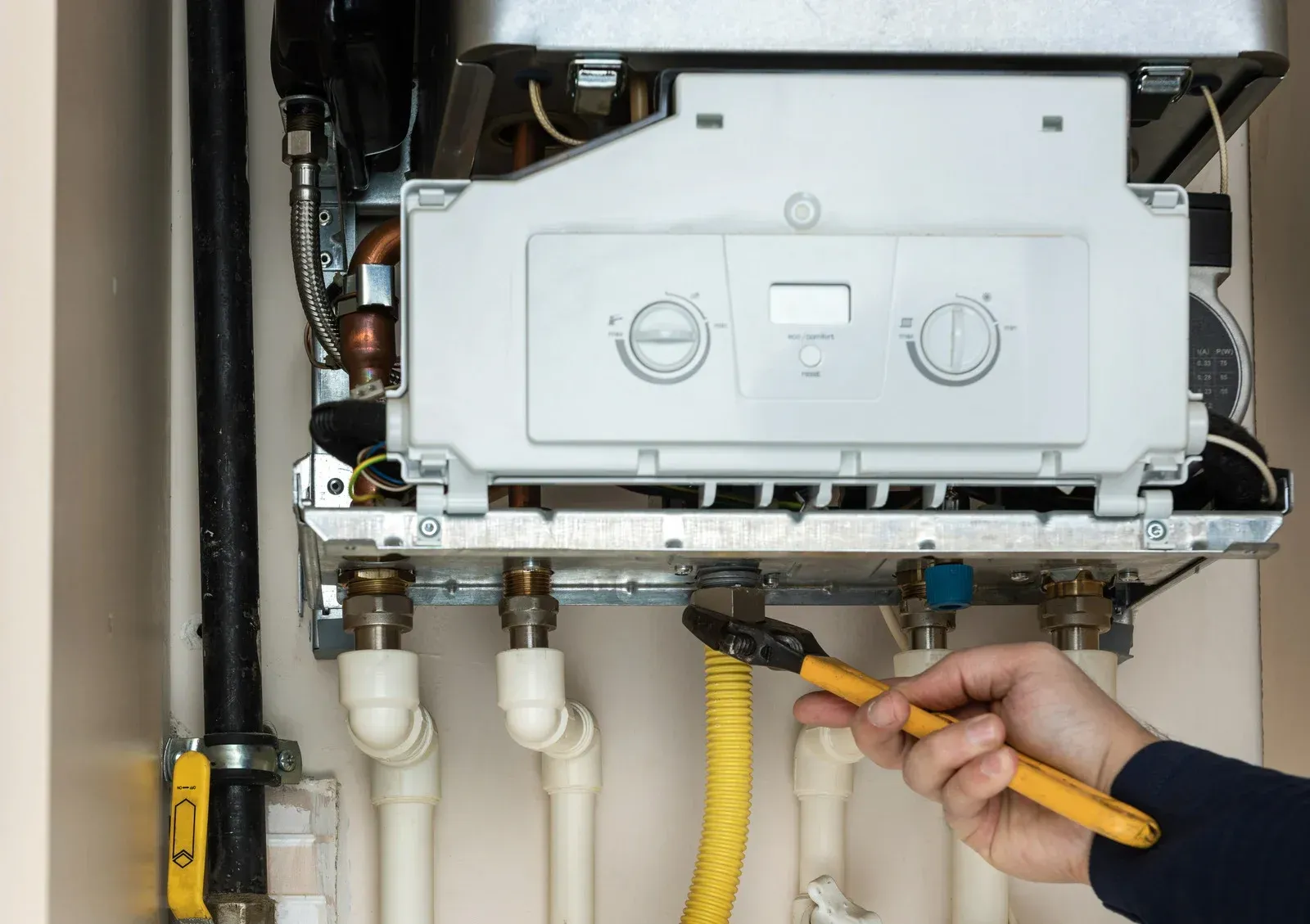
A gas heater makes hot water through a chain of events: a thermostat senses the water has cooled, opens the gas valve, and a pilot flame or igniter lights the burner, while a safety sensor confirms the flame is really there. If any link in that chain breaks, the burner never fires and the water goes cold. On a freezing morning, a few links are far more likely to be the culprit than others.
The pilot or igniter
Check the sight window for the pilot flame. If it is out, relight it once by following the manufacturer's instructions. If it will not stay lit, the problem likely involves another component and requires professional diagnosis.
The thermocouple and flame sensor
The thermocouple senses the pilot flame and keeps gas flowing safely. If coated with soot, corroded, or misaligned, it can shut off the gas supply. A pilot that repeatedly goes out often points to this issue.
The gas shutoff valve
Check that the gas shutoff valve is fully open by ensuring the handle runs parallel with the gas pipe. A valve accidentally bumped closed during storage or maintenance can prevent the water heater from operating.
The vent and condensate line
High-efficiency and tankless gas water heaters can shut down when outdoor vents become blocked by ice or snow, or the condensate line freezes. Clearing obstructions may help, but recurring freezing requires a permanent repair.
WARNING: If you ever smell gas near the heater, hear hissing, or feel lightheaded, stop, leave the area, and call your gas utility and a plumber from somewhere safe. Do not relight anything, flip switches, or keep troubleshooting. A pilot that will not stay lit after one careful attempt is also telling you to stop relighting it and get it looked at, because repeated attempts can let unburned gas build up.
What to Check on an Electric Water Heate
An electric heater warms water with one or two elements inside the tank, each governed by a thermostat, plus a safety switch that cuts power if the water ever overheats. No flame, no pilot, but the same result when something fails: cold water on the morning you least want it.
The breaker
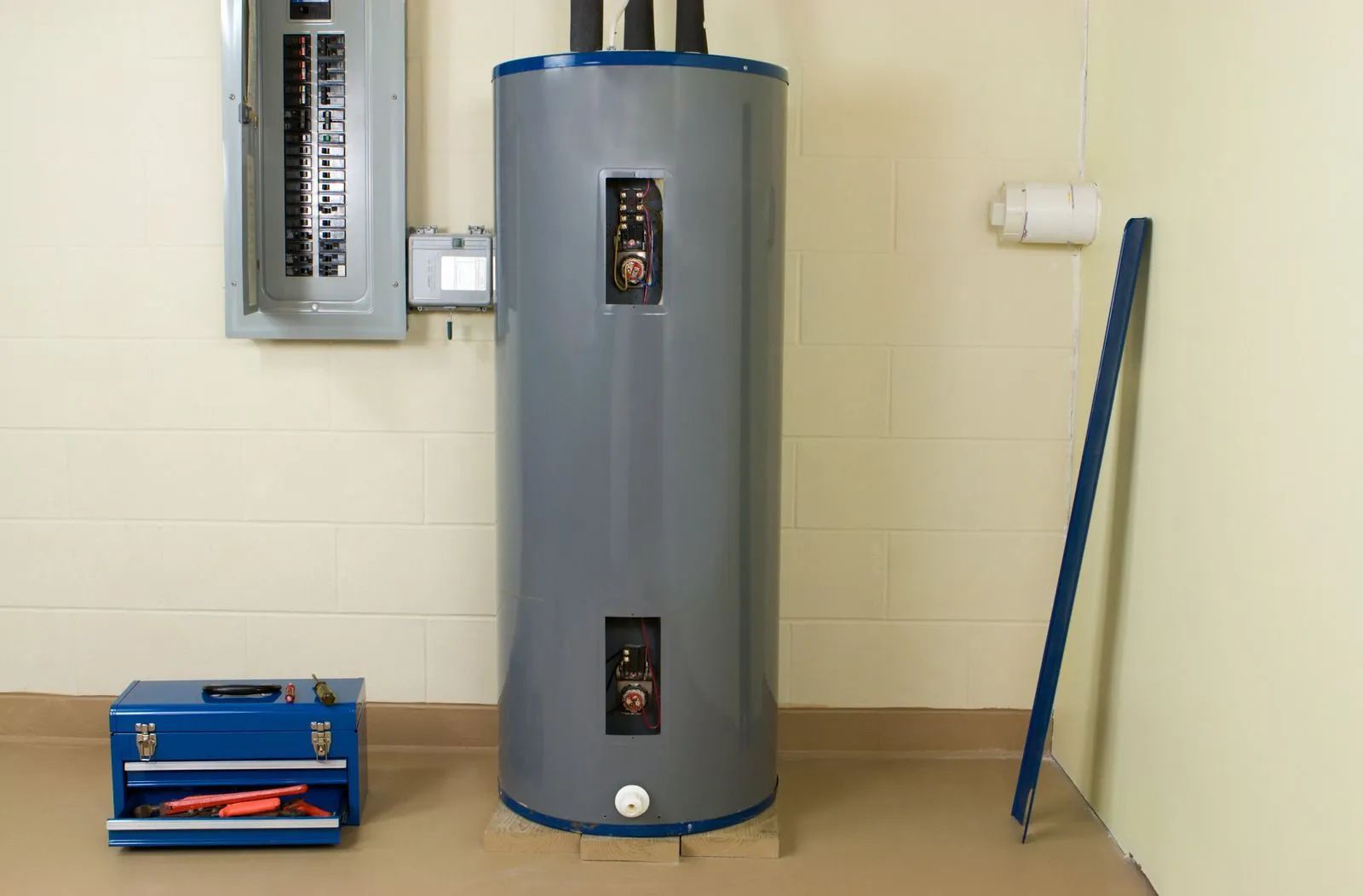
An electric water heater uses a dedicated double-pole breaker. If it has tripped, reset it once. If it trips again immediately, stop resetting it. Repeated trips usually indicate a wiring or heater fault that requires professional diagnosis.
The high-limit reset button
Electric water heaters have a red high-limit reset button behind the upper access panel. Pressing it may restore power temporarily, but if it trips again, a faulty thermostat or another issue should be professionally diagnosed.
A failed heating element
Electric water heaters usually have two heating elements. A failed lower element causes short-lived hot water, while a failed upper element can eliminate hot water entirely. Professional testing identifies the failed component before replacement.
When It Is Time to Stop Checking and Call
Some of the checks above are genuinely do-it-yourself, like confirming a breaker, relighting a pilot once, or waiting out a drained tank. Others are signals that the heater needs hands-on diagnosis rather than another attempt. If the pilot will not stay lit, if the breaker trips again after a reset, if you see water pooling at the base, if the hot water is rusty, or if the tank is rumbling hard, those point to a fault that testing and tools will find faster and more safely than trial and error. The same is true when the unit is well into its second decade and problems keep coming back, because at that point you want a straight read on whether a repair holds or the heater is near the end. On a freezing morning, the fastest path to a hot shower is usually knowing which of these you are dealing with, and that is exactly what a proper diagnosis sorts out.
Frequently Asked Questions
Why do I have no hot water only on the coldest mornings?
Cold weather makes your water heater work much harder because incoming water is much colder. Weak parts like heating elements or a worn thermocouple often fail under the extra demand, making problems appear during the season's coldest mornings.
Is my hot water pipe frozen or is the heater broken?
If cold water flows normally but the hot water never warms, the heater is likely the problem. If only the hot side has little or no flow, a hot water pipe may have frozen instead.
My gas pilot light keeps going out. What does that mean?
A pilot light that will not stay lit often points to a failing thermocouple, burner issue, or draft problem. Relight it once following the instructions, but repeated failures should be professionally diagnosed rather than repeatedly resetting it.
How long should it take for hot water to come back after everyone showers?
Most 40- to 50-gallon gas water heaters recover within 30 to 60 minutes, while electric models often take longer. Winter slows recovery because colder incoming water requires more heating before reaching the desired temperature.
I reset the breaker on my electric heater and it tripped again. Now what?
If the breaker trips again after being reset, stop resetting it. A shorted heating element, faulty wiring, or another electrical problem is likely present and should be professionally tested and repaired before further use.
Does hard water have anything to do with losing hot water in winter?
Yes. Hard water leaves mineral sediment inside the tank, reducing heating efficiency and slowing recovery. During winter, colder incoming water makes that reduced performance more noticeable, increasing the chances of running out of hot water.
Getting Hot Water Back on the Coldest Days
No hot water on a freezing morning almost always comes down to a short list: an empty tank you outran, a frozen line, or a single weak part, a pilot, a thermocouple, an element, or a breaker, that the cold finally exposed. Walking through where the cold is coming from, then checking the pilot and gas valve on a gas unit or the breaker and reset on an electric one, tells you whether this is a quick fix or a real fault. The cold weather is rarely the true cause. It is the thing that reveals a heater that was already running on borrowed time, which is why the coldest morning of the year is so often the one it picks to quit.
Schedule a water heater diagnosis — When you wake up to a cold shower on the worst morning of winter, you want the real reason, not another round of guessing. Pete's Plumbing Repair LLC tests the pilot, thermocouple, gas valve, elements, and breaker, checks for frozen lines and sediment, and tells you plainly whether a repair will hold or the heater is done. Backed by 30 years of experience, the owner-operated team proudly serves homes and businesses throughout Lodi, Bergen County, and Passaic County, New Jersey, with one goal: get your hot water back and keep it running. Reach out to book your
water heater service and stop starting cold mornings with a cold shower.