
Water Heater Leaking From the Tank vs a Fitting? What Each Means
Quick Answer: A puddle at a fitting, valve, or threaded connection is almost always repairable, since the leak is coming from a part outside the tank that can be tightened or swapped. A leak coming from the tank body itself, especially near the bottom seam, means the steel has corroded through and the tank cannot be repaired. The fastest way to tell them apart is to dry every surface with a towel, run the heater through a cycle, and watch where the water actually reappears first.
You go down to the basement for something unrelated and find a puddle spreading across the floor near the water heater. Your first thought is probably the worst one: a cracked tank, a flood, a replacement you were not planning to pay for this month. Before you jump to that conclusion, it is worth five minutes with a dry towel, because where that water is actually coming from changes everything about what happens next.
We get called out for water heater leaks constantly across Bergen and Passaic County, and the split is almost always the same. Most of what looks like a tank failure at first glance turns out to be a fitting, a valve, or a connection that a plumber can fix in under an hour. A smaller number really are a corroded tank, and in those cases no amount of tightening or sealant changes the outcome. Here is how we sort one from the other, and what each one means for your next step.
Why the Source of the Leak Changes Everything
A water heater has two very different kinds of parts, and they fail in two very different ways. The tank itself is a sealed steel vessel with a glass lining inside it. Once that lining breaks down and the bare steel underneath starts corroding, water eventually finds a way through the wall of the tank, and there is no patch, seal, or repair that puts that lining back. A tank leak means replacement, full stop.
Everything else attached to the tank, the fittings, valves, and threaded connections, is serviceable hardware. These are the parts designed to be removed, repaired, and replaced without touching the tank itself. A dripping valve or a corroded fitting is an afternoon repair, not a full system replacement. That is the entire reason this distinction matters before you call anyone: it tells you whether you are looking at a $150 to $300 repair or a full unit swap.
Start With a Dry Towel, Not a Guess
Before you decide anything, confirm where the water is actually coming from. Water on a basement floor travels, drips run down the side of the tank, and condensation can fool almost anyone into thinking they have a tank leak when they do not.
Wipe every surface dry
Use a towel on the top of the tank, the side seams, the valves, the fittings at the top, and the floor around the base. Give it a clean slate.
Run a hot water cycle
Let a faucet run hot water for several minutes so the heater fires and refills, then step back and watch. Water that reappears at a specific fitting or valve within a minute or two is telling you exactly where to look. Water that beads up evenly across the whole tank surface is more likely condensation, which is common when cold incoming water hits a humid basement in Bergen and Passaic County during the muggier months.
Check the floor pattern
A leak dripping straight down from a fitting at the top of the tank leaves a wet trail down the side of the tank before it ever reaches the floor. A true tank leak often shows up first as dampness at the very base, sometimes pooling under the tank itself before it is visible anywhere else, since the failure point is usually low on the tank wall or at the bottom seam.
TIP: Slide a flashlight along the bottom seam of the tank and along every visible fitting while the towel test is drying. Rust streaks or mineral crusting at one specific spot almost always mark the actual source, even before water reappears there.
What a Fitting Leak Looks Like and What It Means
Fitting leaks come from a handful of predictable spots, and each one has its own signature.
The T&P valve
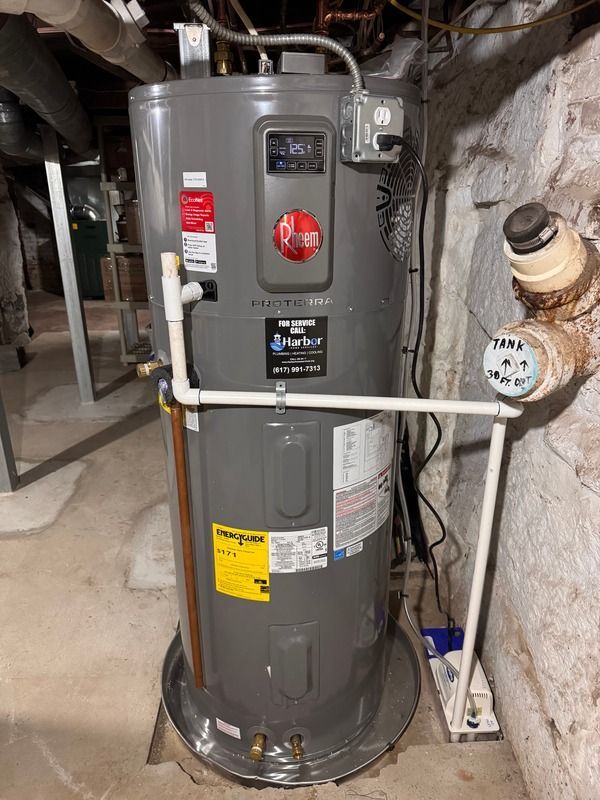
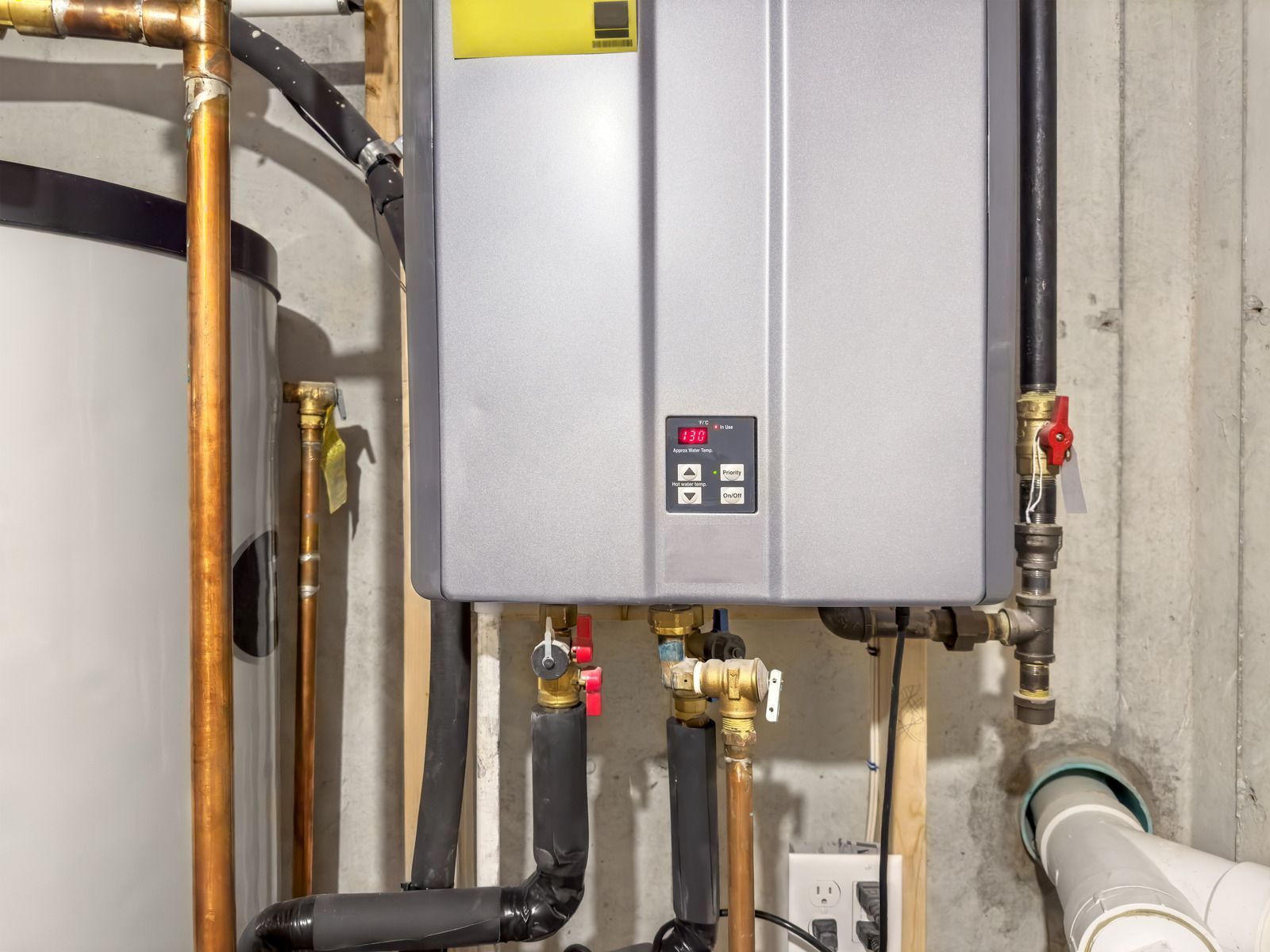
The temperature and pressure relief valve sits near the top of the tank with a discharge pipe running down toward the floor. A drip here can mean the valve is actually doing its job, releasing pressure because the water is running too hot or the supply pressure is too high, or it can mean the valve itself has worn out and needs replacing. Either way, this is never a tank problem, and it is never something to cap or plug, since it is a safety device.
The drain valve
Found at the base of the tank, this valve looks like a small hose spigot and is used to flush sediment. A slow drip here usually traces back to sediment caught in the valve seat, or a seat that has worn out after years without use. It is an easy swap, and hard water sediment common across Bergen and Passaic County is often the reason it never sealed cleanly in the first place.
The inlet and outlet connections
Cold water enters and hot water exits through fittings at the top of the tank, connected through short threaded sections called nipples. These corrode over time, especially on older units, and a drip that runs down the side of the tank from the top almost always traces back here.
Loose unions or supply lines
Sometimes the leak is not even at the heater's own hardware, but at a nearby union, shutoff valve, or supply line that simply worked loose. These show up as a drip that follows gravity down a pipe rather than originating from the tank body.
In every one of these cases, the tank itself holds water just fine. The part failing is downstream or upstream of it, and a plumber can isolate the water, replace the fitting or valve, and have the heater back in service the same visit.
What a Tank Leak Looks Like and What It Means
A true tank leak has a different signature, and it almost always points to one root cause: internal corrosion that has finally worked all the way through the steel.
Water at the bottom seam
The bottom of the tank, particularly around the seam where the tank body meets its base, is where corrosion typically breaks through first. This is usually the lowest point on the unit, so water pools there before you notice it anywhere else.
Rust-colored water or staining
Hot water that runs rusty or metallic-tasting, especially compared to clear cold water from the same house, points to internal rust reaching the point of contaminating the water supply. That is usually a sign the protective anode rod inside the tank wore out long before anyone replaced it, leaving the bare steel exposed to years of hard water.
No amount of tightening changes it
A tank leak does not respond to a wrench. If you dry the area, run a cycle, and the water reappears from the tank body itself rather than a fitting, tightening anything nearby will not stop it, because there is nothing to tighten. The steel has a hole in it.
Age is part of the picture
Most standard tank water heaters are built to last roughly ten to twelve years. A unit leaking from the tank at year six raises different questions than one leaking at year eleven, but either way, once the tank itself is the source, replacement is the only real fix. Repairing a leaking tank is not a service we offer, because there is not a safe or lasting way to do it.
WARNING: If a tank leak is accompanied by a rotten-egg smell, popping or rumbling from inside the tank, or visible bulging on the tank body, stop using the unit and shut off both the water supply and the power or gas to the heater before calling for service. Those signs point to pressure buildup or advanced internal failure, and running the unit further risks a much bigger mess.
Why This Distinction Shows Up So Often in Older North Jersey Homes
Bergen and Passaic County have a lot of housing stock where the water heater sits in an unfinished basement, and hard water is common across the area. Both factors accelerate the exact wear patterns above. Mineral-heavy water speeds up sediment buildup at the drain valve and accelerates corrosion at threaded fittings, which is why fitting leaks show up so frequently on units that are otherwise still healthy. That same hard water also shortens the working life of the anode rod inside the tank, which is the part standing between the steel tank wall and the water itself. Once that rod is spent, the tank clock starts running, and a true tank leak becomes a matter of when rather than if.
What to Do Once You Know Which One You Have
If the leak traces to a fitting or valve, shut off the cold water supply to the heater if you can access it safely, and leave the drip alone rather than over-tightening a fitting, which can crack an already corroded connection and turn a small drip into a bigger one. If the leak is coming from the tank itself, shut off both the water supply and the power or gas, and plan on replacement rather than repair, since there is no fix for a corroded tank wall. In both situations, a plumber confirming the source before any work begins saves you from paying for the wrong fix, and it is the same first step we take on every water heater leak call, gas or electric, tank or tankless.
Frequently Asked Questions
Can a leaking water heater fitting be tightened instead of replaced?
Sometimes. A loose fitting with healthy threads may only need tightening. Corroded nipples, damaged threads, worn valves, or failing T&P valves usually require replacement rather than additional tightening to stop leaks.
How do I know if water on the floor is a leak or just condensation?
Dry the heater completely and run hot water. Condensation usually appears as scattered droplets across the surface, while a leak repeatedly emerges from one specific fitting, valve, seam, or tank location.
Is it safe to keep using a water heater that is leaking from a fitting?
A minor fitting drip may allow short-term use, but it should be repaired promptly. Persistent leaking can worsen, damage surrounding materials, or indicate pressure, corrosion, or another underlying plumbing problem nearby.
Why does my water heater only leak from the bottom?
Water naturally collects at the heater’s lowest point. A bottom puddle may come from a corroded tank seam, drain valve, or water traveling downward from leaking fittings located farther above it.
Does a leaking T&P valve mean my water heater is unsafe?
A leaking T&P valve may indicate excessive temperature, high pressure, or a worn valve. Because it protects the tank from dangerous pressure buildup, never cap or plug it; have it inspected.
How long do the fittings on a water heater typically last compared to the tank?
Fittings and valves may require attention before the tank fails, particularly with hard water. Standard tank water heaters commonly last around ten to twelve years, depending on maintenance and water conditions.
Knowing What Your Water Heater Leak Means
A puddle around a water heater does not always point to a failed tank. Leaking fittings, valves, and connections are common problems that can often be repaired without replacing the entire unit. Pete's Plumbing Repair LLC brings 30 years of experience to diagnosing these issues throughout Lodi, Bergen County, and Passaic County, NJ, carefully tracing the water back to its source so homeowners can understand whether they are dealing with a serviceable component or a deteriorating tank.
When the tank body itself has corroded through, replacement is generally the practical solution because the internal steel vessel cannot be reliably repaired. Water appearing near the base, however, can also travel down from a fitting above, making careful inspection important before reaching a conclusion. Drying the heater and watching where moisture first returns can reveal a great deal. Identifying the source accurately helps prevent unnecessary replacement while ensuring a genuine tank failure is addressed before the leak causes additional damage.